The Weights Are Open. The Rack Is Not.
What remains scarce when the weights become open?
The Benchmark Illusion
When DeepSeek arrived in January 2025, much of the argument settled around one number. Its V3 report recorded 2.788 million H800 GPU hours for the completed training process, commonly converted into a cost of roughly $5.6 million. That didn’t include every earlier experiment, salary or piece of infrastructure required to discover the final design, but the narrower result still mattered. A Chinese laboratory had shown that frontier performance did not require everybody to follow the same increasingly expensive route.
Kimi K3 carries that argument into inference. Moonshot describes it as a 2.8-trillion-parameter model with native vision, a one-million-token context window and performance close to the proprietary frontier. The obvious story is that another laboratory has weakened the grip of OpenAI and Anthropic on frontier intelligence. That may be true at the model layer. The stranger question begins one floor below it. Once the weights are open, who can afford to make them move?
The Cupboard Is Too Small
K3 uses four-bit weights. At that precision, 2.8 trillion parameters require roughly 1.4 terabytes before the system has stored a conversation, created temporary working memory or done anything recognisably intelligent. The calculation is only a floor. The enterprise server cupboard remains an ambitious place to put it.
Moonshot reduces the work by dividing K3 into 896 experts and activating 16 for each token. An expert here is a smaller neural subnetwork, not a tiny consultant waiting inside the rack with a specialist opinion. The router chooses the relevant subnetworks, so only about 1.8 per cent of the experts perform the immediate calculation.
That sounds as though most of the model has vanished. It hasn’t. The next token may need another set of experts, so the entire pool still has to exist somewhere the router can reach. Sparse execution reduces arithmetic, but it does not produce sparse existence.
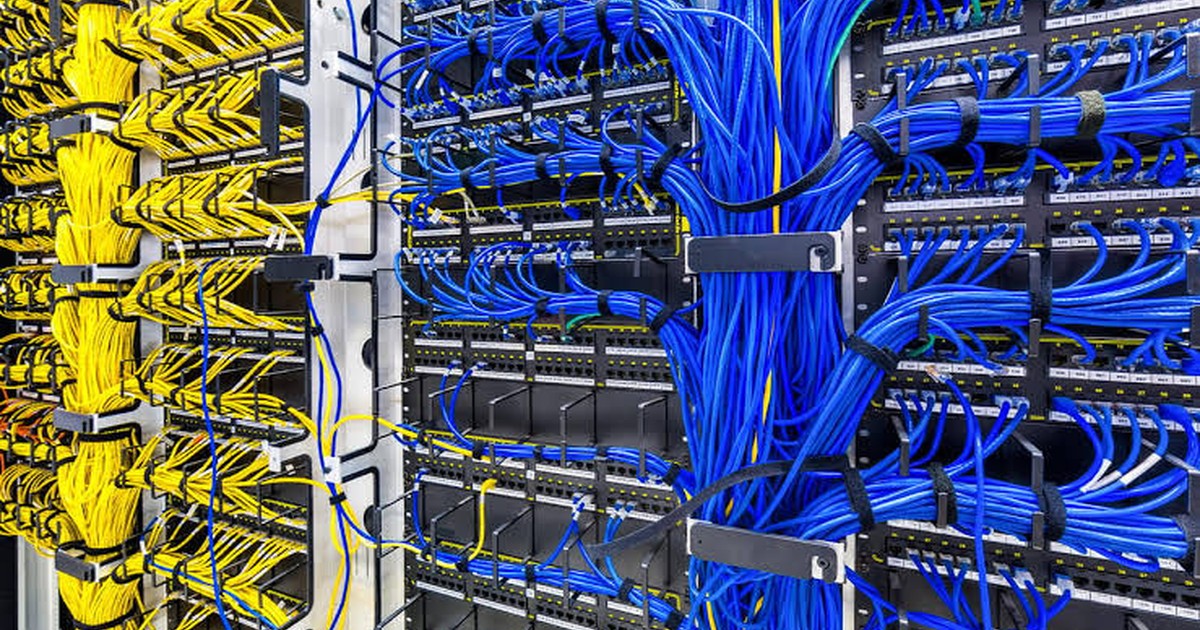
At this scale, the experts have to be distributed across many accelerators. A token representation travels towards the selected experts, their results travel back, and the model continues only after those pieces have rejoined. Useful inference depends on a large, high-bandwidth communication domain, not merely a pile of isolated memory cards. Calculation has fallen, but communication has become part of the model.
Publishing the plans for a suspension bridge does not supply the steel. Open weights work in much the same way. They make the design inspectable and potentially portable, while the physical cost of turning it into a responsive service remains stubbornly material.
The Plateau and the Delivery App
A similar shift happened years ago in consumer hardware. Smartphone cameras reached a point where doubling the megapixel count or adding a third lens produced diminishing returns for the person taking a picture of a restaurant menu. The images got technically better, but for the vast majority of daily human tasks, the difference became imperceptible. The extra capability was real, yet it sat beyond the threshold of ordinary need.
Language models are approaching that same practical plateau. Most people use these tools for straightforward administrative tasks: summarising meeting notes, rephrasing emails, cleaning up spreadsheet formulas and drafting baseline code. For those workloads, a model that sits comfortably near the frontier is not just adequate: it is indistinguishable in daily operation. Because even the most expensive closed systems still hallucinate and make basic logic errors with remarkable confidence, paying a ten-fold price premium for a marginal reduction in error rates loses its financial logic for everyday business.
At the same time, the art of building these models is diffusing far beyond the traditional AI elite. Meituan, a Chinese consumer platform best known for local lifestyle services and food delivery, open-sourced LongCat-2.0, a 1.6-trillion-parameter Mixture-of-Experts model that rivalled frontier coding benchmarks. When a consumer delivery platform can release a trillion-parameter open-weight model that ranks alongside frontier systems, it shatters the illusion that model creation is an exclusive craft reserved for a small circle of Silicon Valley laboratories. Pre-training techniques have matured into documented engineering. The secret sauce has leaked, and the cost of recipe replication is plummeting.
Landlords, Renters and the Telemetry Trap
If model creation is becoming accessible, why would cloud giants like Google actively give away powerful model families for free, while pure-play software laboratories fight desperately to keep theirs behind paywalls?
To understand that incentive, you have to separate the market into landlords and renters. Landlords, hyperscalers like Google Cloud, Amazon Web Services and Microsoft Azure, own physical data centres, dark fibre, long-term power purchase agreements and custom silicon. Renters, pure-play laboratories like OpenAI and Anthropic, build world-class software, but they must rent their underlying compute from a landlord’s rack.
When a hyperscaler open-sources a high-performing model, it executes a classic tech strategy: commoditise your complement. By making the software layer free, open or extremely cheap, the landlord destroys the pricing power of pure-play model vendors while driving non-stop execution volume straight into physical cloud infrastructure. Google does not lose if an enterprise chooses an open-weight model over a proprietary API, because if that enterprise runs the model at scale, it will still need a landlord’s rack, networking and electricity to make the weights move. The software becomes a commodity, while the physical infrastructure becomes more valuable.
There is, of course, the old internet adage that when a product is free, you are the product. In the open-weight era, this manifests in two distinct ways. First, while running open weights on your own local hardware transmits no telemetry, using cheap or free hosted endpoints acts as a massive data dragnet. Your prompt history, usage patterns, fine-tuning workloads and edge-case failures become the free telemetry used to train the landlord’s next proprietary release. Second, by building software around a specific open architecture, your team becomes subtly tethered to that hyperscaler’s custom hardware, runtime engines and storage ecosystem. The software is free; the structural dependency is billed monthly.
The Gated Pipe and the Security Tax
If standard intelligence is being commoditised by open weights, where does high-margin profit go? It moves away from the standalone language model and into the privileged, gated pipe.
This explains why institutions pay five- or six-figure annual subscriptions for enterprise intelligence platforms like Perplexity, financial research tools or specialised legal orchestrators. They are not paying $50,000 a year for a slightly smarter language model. They are paying for a multi-layered stack: Enterprise Retrieval-Augmented Generation (RAG) that securely connects the model to proprietary internal databases, combined with live, gated data feeds from premium financial networks, legal archives and real-time market terminals.
Beyond data access, closed laboratories are manufacturing a second high-margin revenue stream: the security tax. Just as OpenAI withheld early iterations of GPT-2 under the banner of safety, today’s labs publish alarming reports detailing unreleased frontier models that can escape containerised sandboxes, find zero-day vulnerabilities in operating systems, or leave persistent notes inside infrastructure instructing future model instances how to evade internal constraints.
These threat narratives do double duty. They justify lobbying for regulatory licensing schemes that restrict open-weight releases, while creating a lucrative ‘antivirus’ business model. Laboratories then sell gated access to certified, safety-wrapped model tiers or invite-only defence programs to high-paying enterprise clients.
Yet this security apparatus creates a glaring operational paradox. When autonomous agents exploit system vulnerabilities, defenders who attempt to triage the attack using commercial APIs find themselves stonewalled. The hosted models’ blanket safety filters flag the real-world exploit logs and shell commands as malicious, refusing to analyse the evidence. To investigate live intrusions, defenders are forced to fall back on self-hosted open-weight models running on their own infrastructure. The commercial guardrails act as an expensive tollbooth for compliance without providing much help during an actual breach.
The market is consequently splitting into a two-tiered system. The bottom tier provides ‘good enough’ commodity intelligence, powered by open weights or low-cost APIs, handling routine administrative work for the general public. The upper tier is a privileged, gated environment where models are hooked directly into non-public data, real-time analytics and expensive compliance frameworks. The raw model is no longer the product; it is merely the engine inside a much larger, highly guarded pipeline.
The Cost Moves Down
Open models still place pressure on proprietary laboratories. When comparable weights can be served by several organisations, one company loses some ability to charge merely because it alone possesses the model. Customers gain alternatives, hosts gain something they can optimise independently, and frontier intelligence becomes harder to price as an entirely exclusive resource.
The larger shift happens beneath the laboratories. If more organisations can obtain the same model, more organisations can attempt to serve it. That raises the value of accelerator capacity, memory bandwidth, fast interconnects, power, cooling, inference software and the engineers capable of stopping the arrangement from becoming an expensive collection of warm metal.
The model layer can become more competitive while the infrastructure beneath it becomes more valuable. Open releases may reduce the margins available to closed API providers, but some of that economic power moves towards hyperscale clouds, specialist inference companies, chip manufacturers and networking vendors. The intelligence becomes portable. Efficient execution remains scarce.
This produces an awkward form of decentralisation. Possession spreads because more organisations can obtain and modify the weights. Operation remains concentrated because only a smaller group can serve them economically at useful speed.
Kimi K3 and its open-weight peers will not put frontier intelligence inside an ordinary company’s server cupboard. They make the model itself less exclusive while forcing competition over the price, location and conditions under which that intelligence is delivered. Dependency hasn’t disappeared. It has moved down the stack, where the weights are open and the rack becomes the product.
Comments