The Worker Not Born
What happens when a society can produce everything except its future?
The Sealed Bag
In 2006, I was offered a place at a preview screening. I had gone to see something else when somebody asked whether I wanted to stay for an unreleased film. They wouldn’t tell me what it was. At the entrance, I was asked to place my phone inside a bag with my name attached to it, presumably because the future of cinema depended on preventing the blurred recording my phone might have produced from the back row.
The title appeared only after the lights went down. Children of Men. I knew nothing about it, which is now a rare way to meet a film. There was no trailer assembled from all the important scenes, no explanation video waiting underneath it and no row of strangers ranking the ending before I’d reached it.
The world on the screen had stopped producing children. No child had been born for eighteen years, governments had collapsed or hardened, refugees were being caged and Britain had preserved order by becoming a police state. The infertility had not merely removed babies. It had removed the reason to believe that anything being maintained would one day be inherited. The buses still ran. The advertisements still worked. The future had left without taking the infrastructure with it.
The Cry Between Armies
Near the end, Kee carries her newborn through a building where soldiers and insurgents have been killing one another. The child begins to cry. People who had grown accustomed to gunfire stop moving, then make space as the mother passes. The fighting pauses because every person in the building can hear something that has been absent from the world for nearly two decades.
The moment is temporary. Once Kee and the child have passed, the machinery of conflict starts again. The baby has not solved the war or purified anyone inside it. The cry has merely exposed that beneath the factions, uniforms and arguments, everyone still recognises the same lost object.
The film leans deliberately into the Nativity without turning into a sermon. Kee reveals her pregnancy in a barn, jokes about being a virgin and travels as a displaced mother carrying a child through violence. Theo becomes a reluctant Joseph, protecting a future he did not create and will not live to see. The baby matters not because it arrives with a political programme, but because its existence restores meaning to programmes that had continued after their purpose disappeared.
A Virus Without a Body
For years, I remembered the infertility as the result of a virus. That’s not what the film says. It never supplies a cause, partly because Alfonso Cuarón didn’t want the story reduced to a piece of scientific exposition. The infertility works as a physical fact and a wider loss of hope. My memory had inserted a pathogen because extinction seemed to require one.
The correction produces a more difficult question. Does the force that stops a society reproducing need to enter the body at all, or just the mind? Richard Dawkins coined the word meme for a unit of cultural transmission, something copied through imitation rather than inherited through DNA. Cultural evolution researchers have since examined how ideas, education, norms and social networks can spread patterns of thinking and behaviour across populations as effectively as any biological pathogen. They call the process social contagion.
There’s no single meme causing modern fertility decline. There is a population of them, reinforced by material conditions. Children are described as unaffordable, relationships as contests, dependency as failure and commitment as the loss of better options. Each idea may contain a piece of truth. Together, they can produce the practical equivalent of infertility without damaging one reproductive cell.
The Divided House
Young men and women have begun moving apart politically in several Western countries. Gallup found that from 2017 to 2024, 40 per cent of young American women identified as liberal compared with 25 per cent of young men. Public figures such as Jordan Peterson have turned that divergence into a wider diagnosis about sex, status and social roles, while political campaigns and recommendation systems have learnt that resentment keeps people watching longer than reconciliation.
The argument was visible earlier in the 2017 Google memo. James Damore claimed that average psychological differences might explain some of the unequal representation between men and women in technology. The memo became public, its author was dismissed and a technical workplace dispute became another national referendum on whether the sexes were different, oppressed, dishonest or simply tired of one another.
Research does find average differences in vocational interests, including a sizeable people-versus-things difference across male and female populations. The better-known claim that more gender-equal countries produce larger differences in STEM participation is much less settled. The original study received a substantial correction, later researchers disputed its measures, and other work suggested that persistent stereotypes could explain much of the pattern. The useful conclusion is not that biology has defeated equality or that culture has erased biology. It is that partial findings are being recruited into a political conflict that requires each sex to interpret the other as an opposing interest group.
The Contract at Home
A workplace can attempt to make men and women interchangeable in their professional rights. A pregnancy cannot make the same promise. Birth, recovery, feeding and the early months of care create asymmetries that policy may support, redistribute or punish, but cannot make imaginary. The problem begins when an economy requires two uninterrupted incomes while the household still has to absorb work that arrives through one body first.
That tension is particularly visible in South Korea. The country’s employment and wage gaps remain large, working hours are long and flexible arrangements are used by far fewer people than would like them. Housing and private education add another layer, while women continue to carry a substantial income penalty after childbirth. People may want children and still judge the complete arrangement unsafe.
The political argument often treats gender roles as positions one side must impose on the other. The household meets them as unfinished work. Somebody has to earn, somebody has to care, and most households need both people to do both without either activity receiving enough time. The sexes are told they have been liberated from inherited roles, then handed a cost structure that assumes nobody will ever stop working.
Money That Must Move
There is another disagreement sitting beneath the household. Modern central banks operate within a Keynesian economic framework, a system built on the premise that economic health requires continuous aggregate demand and spending. To prevent capital from sitting idle, Keynesian policy targets low positive inflation, typically around two per cent. The structural consequence is plain. Holding uninvested cash carries an intentional penalty, as its purchasing power steadily decays over time.
The Austrian economic tradition begins from a different suspicion. It treats value as subjective, arguing that technological progress and higher productivity should naturally make goods cheaper, thereby rewarding patient saving. Austrian economists oppose central bank manipulation of money supplies, advocating for hard currency that authority cannot expand. Bitcoin appeals to that instinct because its issuance is fixed by code and its protocol limits total supply to twenty-one million coins, guaranteeing algorithmic scarcity in a world of expanding fiat currency.
For younger households, seeking out hard assets, equity markets or cryptocurrencies is not simply a narrow scramble to buy a house. It’s a broader strategy to establish long-term financial stability, plan for a family and secure a future that uninvested cash can no longer protect. When saving wages in a bank account means watching purchasing power erode, ordinary work ceases to feel like a reliable anchor for life planning.
The K Without a Middle
A K-shaped economy describes two groups leaving the same disturbance in different directions. Asset owners, senior professionals and companies able to deploy new technology move along the upper arm. People without property, savings or secure entry into a career move down the other. The letter contains no middle route, which is awkward because the middle route used to be called having a normal job.
Artificial intelligence steepens that split, operating through a version of Jevons paradox. Rather than shortening the working week or lightening the load, efficiency increases the required baseline output. Because a worker equipped with AI tools can process more data or draft more code in an hour, the organisation adjusts expectations upward. You do less of the routine task so that you can complete three times as many tasks overall, compounding workplace pressure and exhaustion.
At the same time, institutional pay frameworks adapt to shifting technical scarcity. In public sector institutions like the UK Civil Service, specialised capability frameworks, such as the Government Digital and Data (DDaT) framework, use non-contractual allowances to attract technical talent. But as AI commoditises specific skills or market demand fluctuates, these allowances can be reviewed, reduced or withdrawn. Combined with administrative evaluation systems like the NHS Agenda for Change, workers face a volatile horizon where job descriptions can be compressed or re-evaluated downward as software absorbs historical responsibilities, eroding income stability just as living costs rise.
The Empty Chair
South Korea gives these pressures less distance in which to hide. In 2026, 210 elementary schools enrolled no new first-grade pupils, an increase of 81 per cent from five years earlier. Some schools held entrance ceremonies for one child. The decorations, teachers and buildings remained ready, although the population they were designed to receive had thinned beneath them.
The country’s total fertility rate reached 0.72 in 2023 and rose slightly to 0.75 in 2024. The increase matters, but it does not change the scale of the problem. OECD research finds that Koreans still report wanting more children than they have, while housing, education costs, labour-market insecurity, long working hours and the difficulty of combining employment with motherhood continue to narrow the practical route into family life.
The classroom is therefore not empty because South Korea has stopped functioning. The country remains wealthy, technically capable and embedded in global manufacturing. Offices open, factories run and financial markets continue assigning prices to the future. The institution built to receive that future remains in place while the future is being declined household by household.
The Worker Who Was Not Born
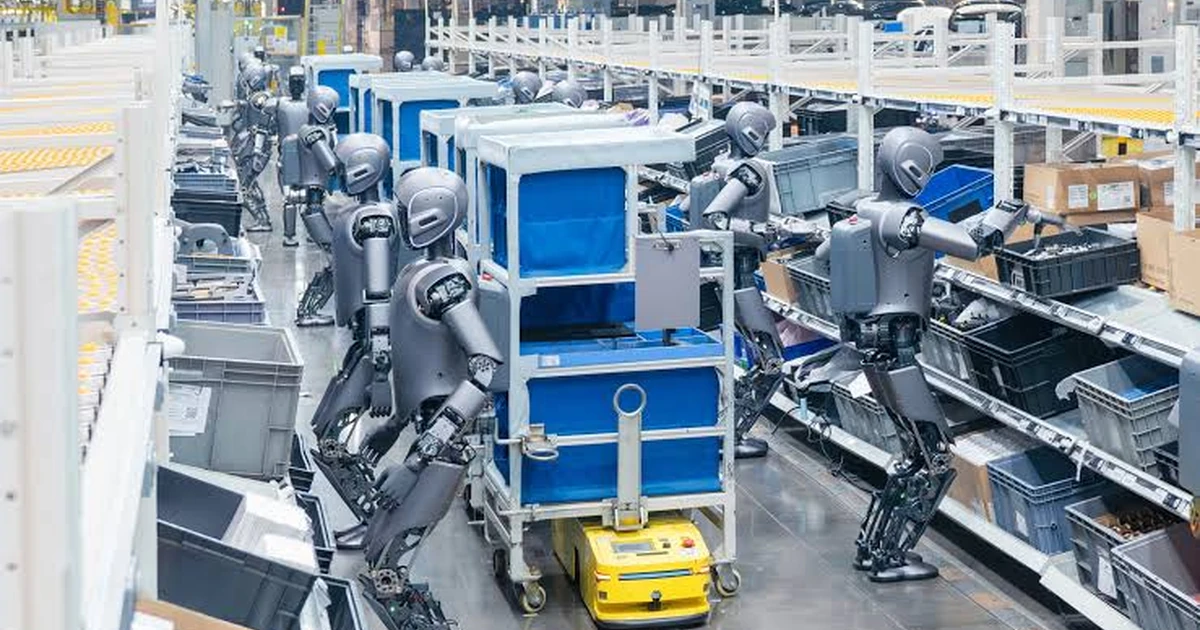
South Korea has also built the most robot-dense manufacturing economy in the world, operating roughly 1,220 industrial robots for every 10,000 manufacturing employees.
This trajectory is coming for the West, and the policymakers and legislators watching South Korea know it. To delay or buffer the same demographic arithmetic, Western governments have turned to high net migration as an immediate stopgap, using imported labour as working capital to fill structural shortages and support tax bases while domestic family formation stalls. Yet this remains a temporary bridge. Software and Large Language Models alone cannot replace physical labour; unmonitored LLMs make compounding errors, and until AI is successfully embodied in dexterous physical robotics, software cannot build houses, care for the elderly or maintain physical infrastructure.
At the same time, governments increasingly tighten the boundaries around the resident population. In the UK, structural tax reforms, such as the abolition of the non-domiciled regime in favour of a strict residence-based tax model, ensure that worldwide income and gains are captured locally. For those seeking to move abroad, new residence-based rules act as a financial lock-in. Individuals who have been resident for ten years remain subject to UK Inheritance Tax on their global assets for a ‘tail’ period of up to a decade after departure. Combined with post-Brexit mobility restrictions that removed automatic entry into Europe, citizens face greater friction if they try to leave. The state taxes worldwide capital and income while making exit more costly, even as wages struggle to keep pace with living expenses.
In the factory, the corporate logic for automation remains difficult to dispute. If fewer workers will be available, each worker can be surrounded by more machinery. Robots can assemble components, move materials and inspect products without waiting for another generation to finish school. They do not require housing, private tutoring or parental leave.
The analogy fails outside the factory. A robot can replace a task, a shift or part of a worker’s output. It does not automatically become a taxpayer, consumer, neighbour, carer or parent. It will not form another household or produce the next cohort of engineers required to repair it. Automation supplies the employer with the worker who was not born while leaving the society without the person who would have existed around that worker.
What the Machine Is Being Asked to Save
The machine is being asked to carry more than production. It must maintain exports, preserve pension systems, compensate for a contracting labour force and keep national growth moving after the household has become less willing or able to reproduce itself. Artificial intelligence extends the promise from manual work into language, analysis and administration. The economy begins to imagine that continuity can be obtained by automating every function previously supplied by continuity.
There is truth inside that promise. A society with fewer people will need greater productivity, better tools and more automation. The mistake is treating productive capacity and social reproduction as the same quantity. A factory can produce more with fewer workers while the surrounding population becomes poorer in time, trust and confidence. The accounts record the output. They do not record the children whose parents decided the arrangement was too fragile.
I still return to the child being carried through the smoke in Children of Men. The gunfire stops because the sound reveals what the war had forgotten, although the pause lasts only until the old machinery resumes. South Korea has not entered that world. It has produced an earlier and quieter image of its economics. A child sits alone beneath decorations prepared for a class, while somewhere else a robot begins another shift in a factory built to survive the missing worker. The economy has found a way to continue. It has not found a way to be inherited.
Comments