Preparing for the Future: Is Your Career Future-Proof?
What survives when the work inside a job begins to move?

Some people say artificial intelligence will take our jobs. Others say new jobs will appear and there is nothing to fear. Both claims avoid the harder question. When is this future meant to arrive?
When is this future?
Five years and fifty years require different decisions. A technology may be inevitable in principle and irrelevant to the person choosing what to study next year. It may alter one task immediately while leaving the occupation around it intact for decades. Nobody can predict the timetable with precision, but we can look at the direction of travel and ask what kind of person remains useful while the work changes underneath them.
The Work Inside the Job
A job looks like one object because it has one title. In practice, it is a bundle of tasks. A doctor examines patients, recognises patterns, explains uncertainty, records information and decides what should happen next. An accountant gathers documents, applies rules, checks exceptions and advises a client. A manager reads reports, coordinates people, resolves conflict and makes decisions with incomplete information.
Technology does not meet all of those tasks at once. TurboTax can make part of a tax return easier without becoming an accountant. A fraud detection system can search through billions of transactions without understanding the customer whose card has just been blocked.
The machine enters where a task can be made explicit, measured and repeated. The occupation remains because the other tasks still have to be joined together. That changes the question from which jobs will disappear to which parts of my job are becoming easier to reproduce.
The Skills Between the Tasks
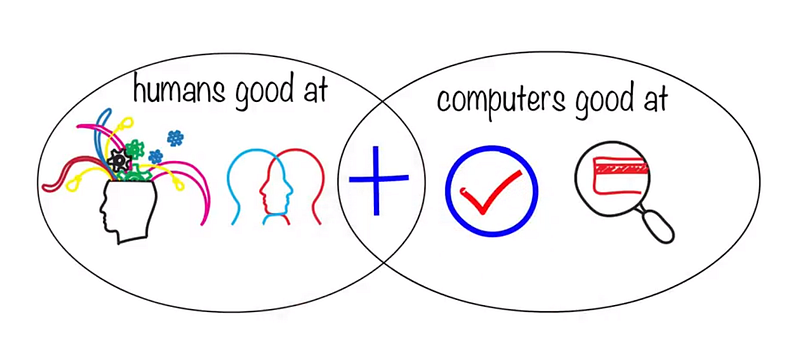
Leadership, communication, storytelling, empathy, creativity and imagination are often described as human advantages.
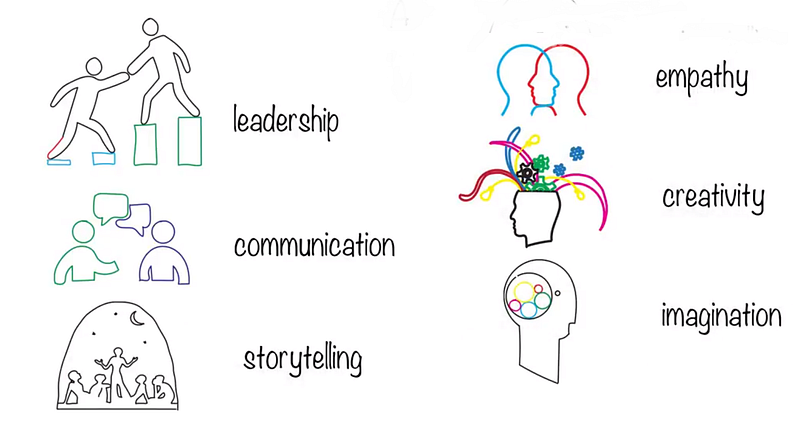
Skills for now and the future
These abilities are difficult to reduce to a written procedure. They belong to the world of tacit knowledge, where judgement is learned through practice, context and contact with other people. A nurse does not comfort a frightened patient by consulting a script alone. A leader does not resolve a conflict by selecting the formally correct sentence. The useful action depends on timing, tone and a reading of the situation that is difficult to write down completely. Tacit skill matters because it joins the explicit parts of the work, but it is not a shelter on its own.
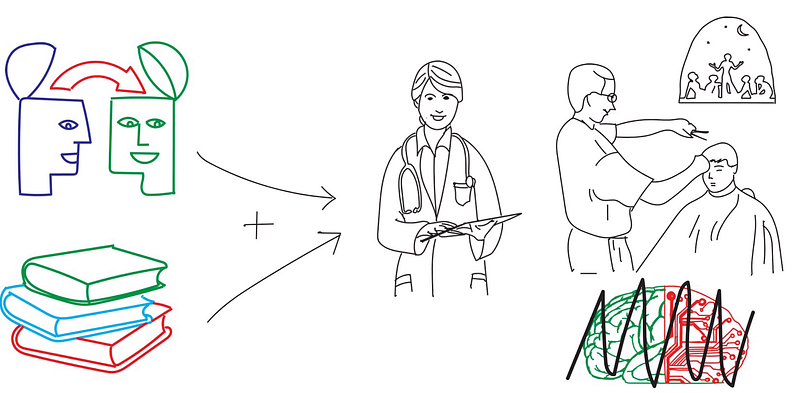
A barber may combine dexterity, conversation and creativity in a role that is difficult to automate. That does not guarantee high income or long-term security. Resistance to automation is not the same thing as economic value.
Foundational knowledge still matters. Communication makes a clinician better because there is clinical knowledge worth communicating. Creativity becomes useful when it can act on a material, market or problem the person understands. The future does not belong to soft skills instead of hard skills. It belongs to the ability to connect them.
The Compound Professional
A single skill is easy to name. A useful combination is harder to replace. A doctor with analytical ability can understand both the patient and the system producing the recommendation. An engineer who can tell a clear story can move an idea through an organisation. A designer who understands psychology can see why a technically correct interface still fails the person using it. None of those combinations is unique by itself. The value comes from the intersection.
Artificial intelligence is still narrow. A system can outperform people at a defined task while remaining unable to carry the surrounding profession. It may recognise a pattern in an image without understanding the social meaning of the diagnosis. It may generate a recommendation without knowing which constraint in the room makes that recommendation impossible.
The advantage of the person is not that the machine can never learn another task. It is that the person can connect tasks that were trained, measured and experienced separately. A career cannot be protected by finding one thing computers will never do because the boundary will keep moving. The stronger position is to become good at crossing boundaries.
A Bicycle Is Not a Plane
Current artificial intelligence can be compared with a bicycle. A bicycle moves a person farther and faster than walking, changing the practical distance between places. A car is not simply a bicycle with more pedals, however, and an aeroplane is not a faster car. Each machine crosses a different boundary by changing the architecture of movement.
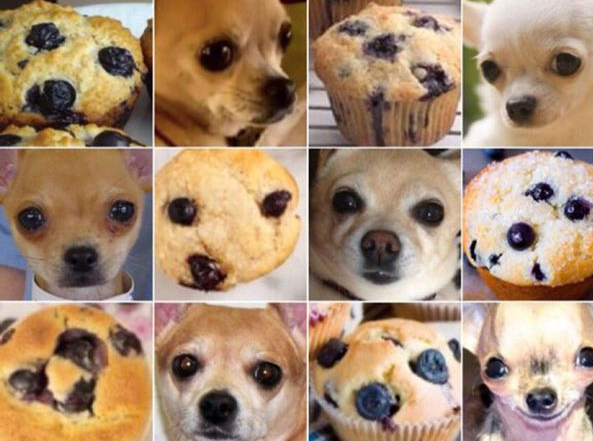
Deep learning has produced remarkable progress because neural networks can learn patterns from large amounts of data. They can classify images, recognise speech and discover structures that would be difficult to encode by hand. This does not make them general minds. A model can distinguish dogs from muffins across a dataset without understanding either object as a child does. It does not know that one can be frightened, fed or taken for a walk while the other can be eaten. It has learned a boundary inside the examples it was given.
Scale can take the system farther. It does not prove that the next kind of intelligence is only more of the same.
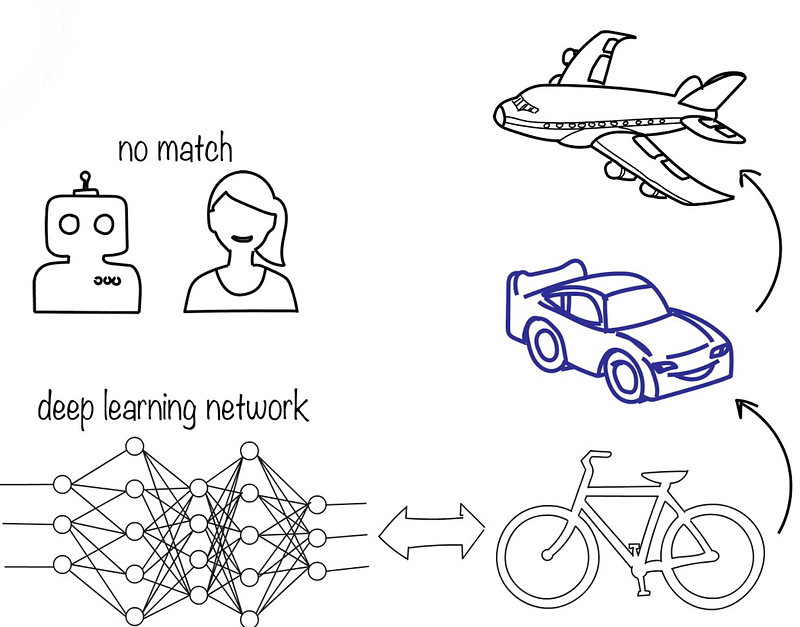
AI still has a long way to go
This matters for career planning because the future is unlikely to arrive as one complete machine capable of replacing every human activity. It will arrive through uneven advances, each making one part of the work cheaper, faster or easier to reproduce. The person who can reorganise around those changes will have more room than the person waiting for a final answer about whether the job is safe.
The Degree That Keeps Moving
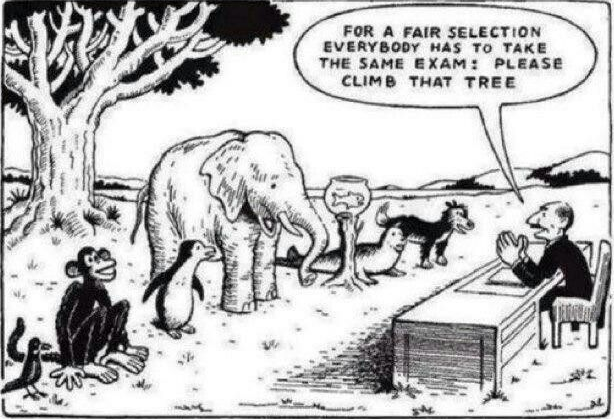
Education is still organised around stable professional containers. A student chooses medicine, engineering, history or another field, then follows a predetermined set of classes towards the corresponding degree. That structure provides depth, but it also encourages the belief that learning ends when the qualification is complete. The workplace is moving in the opposite direction.
A person may need the depth of one discipline and the language of several others. The doctor may need data literacy. The engineer may need ethics and communication. The teacher may need to understand digital platforms. The manager may need enough technical knowledge to know when a dashboard is hiding more than it reveals. The degree remains a foundation. It cannot remain the whole building.
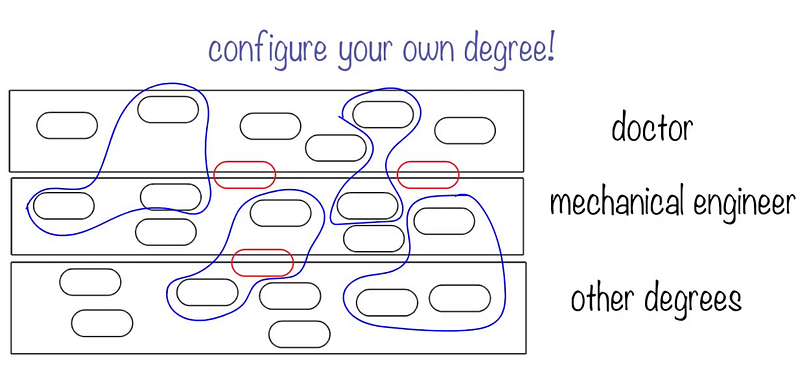
Universities do not always make this easy. The student may have to build the missing edges through optional classes, independent projects, online courses and work outside the formal curriculum. The aim is not to collect unrelated skills. It is to construct a combination that can meet more than one version of the future.
A Career That Can Bend
The most useful learning cycle is simple.
- Assess what is changing.
- Learn what the change now requires.
- Apply it to a real problem.
Then repeat. Assessment without learning becomes anxiety. Learning without application becomes storage. Application without reassessment becomes habit.
The cycle matters because no qualification can remain current by standing still. New tools alter the value of old tasks. Old knowledge becomes useful again when joined to a new system. The person has to keep watching the boundary.
A future-proof career may be a contradiction. The future is precisely the thing that changes the conditions under which the career was built. The stronger goal is not a career that cannot be changed. It is a career that can change shape without losing its centre.
Comments