The Towers of Babel: Ascent Under Ignorance
What happens when a shared technical mission becomes too large for one language, one institution or one territory to hold?
Yesterday, the United Kingdom voted to leave the European Union. The result is being treated, rightly, as a political shock. It is about borders, sovereignty, migration, money, resentment, memory and trust. It is about who gets to decide where power sits. That is the visible layer, but there is another shape inside it. At the same moment that technical systems are becoming harder to build alone, politics is rediscovering the comfort of separation. The machines need coordination. The people are voting for distance. That may be the beginning of a problem I don’t yet have a name for.
Six months ago, OpenAI announced itself as a non-profit artificial intelligence research company. The language was unusually clean. Digital intelligence should benefit humanity as a whole. Research should be shared. No private actor should be allowed to own the future by being first to the right machine. It was an attractive claim, partly because it sounded like a refusal of the usual gravity. No monopoly. No closed priesthood. No single tower.
Then, in March, AlphaGo defeated Lee Sedol. That victory wasn’t just a game result. Go had been one of those human territories people pointed to when they wanted to say that intuition still had a protected province. Chess had fallen, but Go was wider, stranger and less easily searched by force. AlphaGo didn’t win by being handed a complete book of rules for beauty and judgement. It learnt patterns, searched and used neural networks and computation at a scale ordinary researchers cannot casually reproduce. That is the part I can’t stop looking at. The public language of artificial intelligence is becoming more open, universal and humanitarian, while the physical machinery underneath it becomes more concentrated. The idea wants to belong to everyone. The infrastructure not so much. This is where the story of Babel comes to mind.
The One Language
In Genesis 11, the people begin with one language and a shared speech. That detail arrives before the tower. It doesn’t start with bricks. It starts with coordination. People understand one another, plan together and carry a single intention across many hands. Then they decide to build.
The usual reading focuses on pride. People try to reach heaven, and heaven responds. That is true enough, but the mechanical part is more interesting. The project isn’t stopped by destroying the bricks. It is stopped by breaking the communication layer. The builders lose mutual understanding, the tower becomes impossible because the shared signal collapses, and they scatter. The story understands infrastructure as language before it understands infrastructure as stone. The tower is made of bricks, but it lives in the ability of the builders to remain coordinated.
That is why the story feels current. Machine intelligence is still young enough to speak in one language. Researchers publish papers. Code circulates. Conferences create shared vocabulary. People still talk as though the field is one room, one argument and one climb. There is a comforting belief that if the risks become serious enough, the builders will simply keep talking. I don’t know if that belief survives scale.
The Open Tower
OpenAI’s premise is elegant because it tries to solve monopoly with distribution. If the work is open, no one company can quietly capture the whole thing. If the benefits are framed as human benefits, the project isn’t supposed to collapse into national advantage or private gain. The tower is to be built in public. There is something admirable in that. It is better than pretending there is no danger in concentration, and better than treating intelligence as one more product category. It says, at least at the level of founding language, that the shape of ownership matters.
Openness and power are not the same thing, though. Open code doesn’t make compute evenly distributed, papers don’t distribute talent, and ideals do not cause electricity, chips, data, capital and institutional patience to appear wherever they are needed. A method can be shared while the ability to execute it remains scarce. That split may become more important than the intention behind it.
AlphaGo makes the difference visible. Modern machine intelligence is not only a clever algorithm. It is an arrangement of research culture, data, hardware, engineering discipline and capital. The breakthrough has a body. It sits somewhere, consumes energy, requires teams and belongs to an institution before it becomes a paper. This is the first fracture. The language of the field can be universal while the means of ascent remain local.
The Stone Under the Speech
A tower is not an idea. It has weight, and artificial intelligence is beginning to show the same property. For years it was possible to think of AI as mathematics, software, academic papers and cleverness. That picture is still partly true, but it is becoming incomplete. The important systems now need machines, specialised hardware, large teams, storage, cooling, money and time. They need organisations able to absorb failure before success appears.
That changes the politics of the work. A small research programme can be generous in the abstract. A strategic capability cannot remain abstract for long. Once a machine can alter industry, defence, medicine, surveillance, logistics or finance, it stops being only a scientific object. It becomes territory by other means.
This doesn’t require bad faith, which is what makes it harder. Nobody has to begin as a villain. A laboratory may want openness, a company safety, a government stability and a university knowledge. The capability itself changes the incentives around them. Once the thing becomes important enough, the question is no longer simply what should be built. It becomes who can afford not to build it.
The Vote at the Border
The referendum isn’t about artificial intelligence. It would be lazy to pretend otherwise. Brexit comes from its own history, grievances and arguments about membership and sovereignty. It does, however, reveal something about the world into which machine intelligence is arriving. The world is not dissolving into one rational technical commons. It is hardening in places and asking where law stops, obligation ends, control returns and borders can be made visible again. The European project has always been, among other things, an attempt to make certain kinds of war and rivalry harder by binding nations into shared institutions. Yesterday’s vote says that binding has limits.
Advanced technology does not float above this. It lands inside it. If artificial intelligence becomes strategically important, it won’t be governed by researchers alone. It will be pulled into the old language of state interest. Talent, compute and location will matter. Export, secrecy, immigration, investment and alliance will matter. A laboratory can announce a human mission, but the machines still sit on soil.
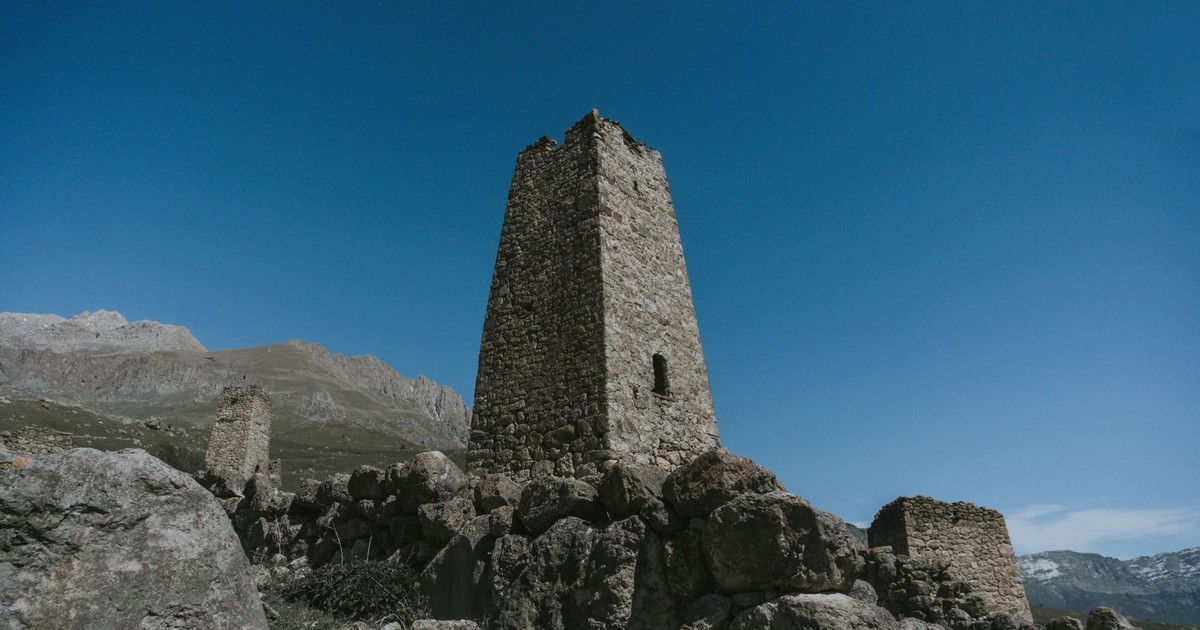
The tower has to be built somewhere.
Ascent Under Ignorance
The builders of Babel don’t know what their project will become. That is part of the horror of the story. They aren’t described as monsters. They are builders with a language, a city, a plan and a direction. They are doing what coordinated people do when coordination works too well. They build upward.
There is a similar innocence in the current moment. Not innocence as purity, but as partial sight. The people building machine intelligence can see some of the risks. They can see misuse, concentration, accidents and competition. They can see enough to write careful founding statements and speak of safety. What nobody can yet see is what the project becomes once compute, capital and sovereignty can no longer be separated.
That is ascent under ignorance. Not stupidity, and not recklessness alone. It is the more ordinary condition of people building at the edge of what they can understand, using tools that alter the meaning of the project while it is still moving. The old tower failed because the language fractured. The modern tower may fracture for the opposite reason. It may begin to work. Success attracts capital, which draws institutions, and strategic institutions rarely arrive without states, borders, secrecy and fear nearby. The shared language may remain in the papers while the actual ascent begins to split.
Many Towers
The original story ends with scattering. The people stop building, move outward and leave the tower unfinished. I’m not sure our version works like that. If the builders of machine intelligence scatter, they won’t forget the blueprint. They will take it into companies, universities, defence laboratories, private institutes and national projects. Some will publish. Some will close. Some will speak the language of safety, others the language of advantage, and some will believe those are the same thing.
The danger is not only one tower reaching too high. It is many towers rising because no builder trusts the others to stop. Babel once described the end of a unified ascent. Machine intelligence may turn scattering into its engine. Once the room breaks apart, each group has another reason to climb faster. Nobody wants to remain on the ground while another tower reaches a higher layer.
That is why the OpenAI premise is so interesting and so fragile. It tries to keep intelligence in the language of humanity before intelligence is captured by the language of power. That may be the right instinct, but instincts are not structures. A declaration can name a hope. It cannot by itself hold back the material pressure of success.
A common language is not enough once the tower becomes strategic.
The Broken Room
Something ended yesterday, or at least changed shape. The United Kingdom has chosen a harder boundary. The vote belongs to politics, but it is not only political in its meaning. It shows how quickly a shared room can become a disputed one.
That is the pressure machine intelligence is entering. A field that still wants to speak as a single scientific project is moving into a world that is remembering how to fracture. The more capable the systems become, the less likely they are to remain under one language, one institution or one moral vocabulary. The hope is that openness can prevent capture. The fear is that it may only spread the blueprint before the builders scatter.
If Babel has anything to teach here, it is not that building is forbidden. It is that ascent changes coordination. At small scale, people can speak of humanity. At larger scale, stone, territory and fear enter the room, then the language begins to split.
The tower does not have to fall.
It may multiply.
Comments